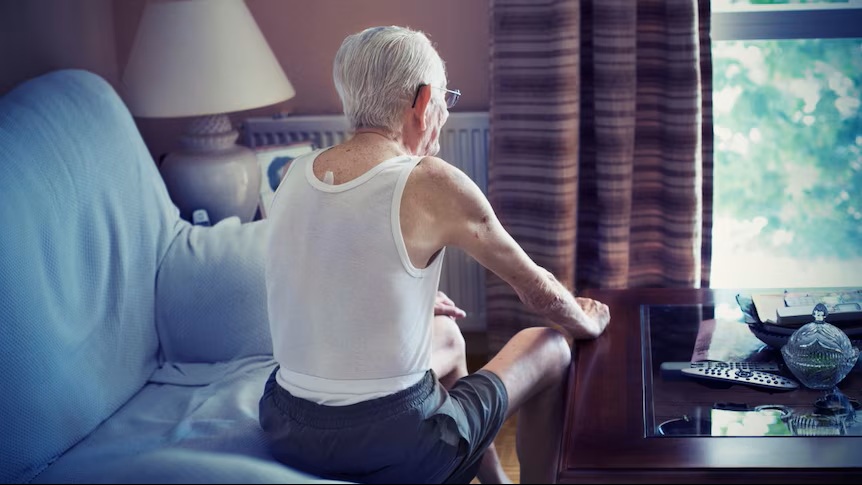
A moment before the day
Context: why this problem exists here
Morangup isn’t a conventional “town” with a main street and services. It has always functioned more like a rural refuge: space, privacy, self-reliance, and distance from the noise of Perth while still being reachable when needed.
That original intent matters now, because a place built around independence does not automatically support ageing residents when driving becomes difficult, family support is absent, and informal lift networks feel uncomfortable to access.
Morangup was designed for fortitude and isolation. Those same strengths become liabilities when mobility declines.
Original settlement reality: retreat, not a service centre
When rural residential subdivisions took off across the hills, the implied “deal” was clear: larger blocks, fewer neighbours, fewer rules, and no expectation of urban convenience.
Why public transport is not “missing” — it’s structurally unlikely
Fixed-route public transport relies on density and destination. Morangup has neither in the way a bus network needs. However, the collective greater 6083 region certainly now does.
The elderly cohort: long-term builders, now increasingly stranded
Many older Morangup residents have been here for decades. They built homes, sheds, access tracks, gardens, and the practical reality of the place.
On criticism, driving speed, and the “petrified” label
From time to time, frustration surfaces about slower drivers on roads like Toodyay Road. Language such as “petrified oldies” may feel like a throwaway remark, but it is worth pausing on what that phrase actually implies.
If someone is genuinely fearful behind the wheel, that fear does not exist in isolation. It often reflects a broader reality: limited alternatives, no public transport, no comfortable way to ask for help, and no safe or dignified option to simply stop driving altogether.
In Morangup, many older residents continue to drive not because it is easy or enjoyable, but because it is the only remaining line of access to medical care, food, supplies, and basic independence.
Criticism of cautious driving can therefore miss the larger context. What looks like inconvenience on the road is often the visible edge of a much deeper access problem.
If slower driving is a problem, the real question is not “why don’t they drive faster?” but “what other choices do they actually have?”
Why driving gets harder with age (and why “just drive better” isn’t a plan)
Driving is not one skill. It is a stack of skills happening at once: seeing, scanning, judging speed and distance, holding attention, reacting, and making controlled movements under pressure. Ageing can touch any of those layers, even in people who are otherwise capable, independent, and careful.
Concentration, cognition, and decision load
Older drivers can experience reduced tolerance for complex, fast-moving environments — not always because they are “confused”, but because the decision load increases. Multi-lane merging, inconsistent driver behaviour, glare, roadworks, or heavy vehicles can become disproportionately draining. Cautious speed is often a form of self-regulation.
Vision, hearing, perspective, and depth judgement
Subtle changes in vision (contrast sensitivity, night driving, glare recovery, peripheral awareness) can make rural driving feel harsher than it looks from the outside. Hearing changes can also reduce early warning cues (sirens, horns, engine noise, approaching vehicles).
Motor control, reaction time, and physical comfort
Even with strong habits and good intentions, ageing can bring stiffness, slower movement, pain, and reduced fine control. That affects shoulder checks, head turns, braking confidence, and speed choice — particularly on unfamiliar runs or in heat.
Medication effects are real, and they vary by person
Many seniors are managing multiple prescriptions. Some medications (or combinations) can cause drowsiness, dizziness, slower reaction time, blurred vision, nausea, or tremor. Sometimes the label says “use caution”, and the person has to decide whether today is “fine” — or not.
The medical urgency layer (and why the risk is not theoretical)
This is where Morangup becomes structurally unfair. If your specialist, imaging, oncology, cardiology, or procedural care is in Midland or further (including Fiona Stanley Hospital or Sir Charles Gairdner Hospital), the trip is not a simple commute. It is longer time-on-road, higher traffic complexity, higher stress, and often time pressure.
For someone already carrying fatigue, pain, medication side effects, or anxiety about results and treatment, that drive can be a genuine psychological event. Expecting “perfect motorway confidence” from that scenario is not realistic.
Social mocking increases isolation (and reduces help-seeking)
Ridicule on social media doesn’t just “vent frustration”. It is unhelpful, and it can reduce a senior’s willingness to ask for a lift, accept support, or admit they are struggling. That is how isolation hardens: not from one comment, but from repeated signals that needing help is something to be laughed at.
In practical terms, delayed appointments, missed follow-ups, and deferred care can translate into worse outcomes. Metro residents have more transport options. Rural ageing residents often do not.
From frustration to practical awareness
This is not an argument for ignoring road rules or lowering standards. It is an invitation to recognise that Morangup’s structure leaves some residents with very few options.
Once that is understood, the conversation can shift away from blame and toward small, realistic acts of community-mindedness that fit Morangup’s character, such as:
- normalising informal ride-sharing where trust already exists
- making lifts feel reciprocal, not charitable
- offering transport quietly, without publicity or pressure
- recognising that independence sometimes means accepting help on one’s own terms
None of these require turning Morangup into a town, creating programs, or forcing participation. They simply acknowledge the lived reality behind the wheel.
A government blind spot: rural residential isn’t treated like a town
In planning terms, Morangup is typically treated as rural residential: a place where services are assumed to be self-managed or accessed by private car.
The Skinny
The current reality is not primarily about blame, attitudes, or a lack of care. It is a structural outcome: a place built for independence now supporting residents who are ageing without transport, without nearby facilities, and without low-pressure social pathways to get help.
Thank you for reading and for being part of our shared Morangup story —
your presence makes this community stronger.